GMO Corn vs Natural Corn: Why Choosing Nature Matters!
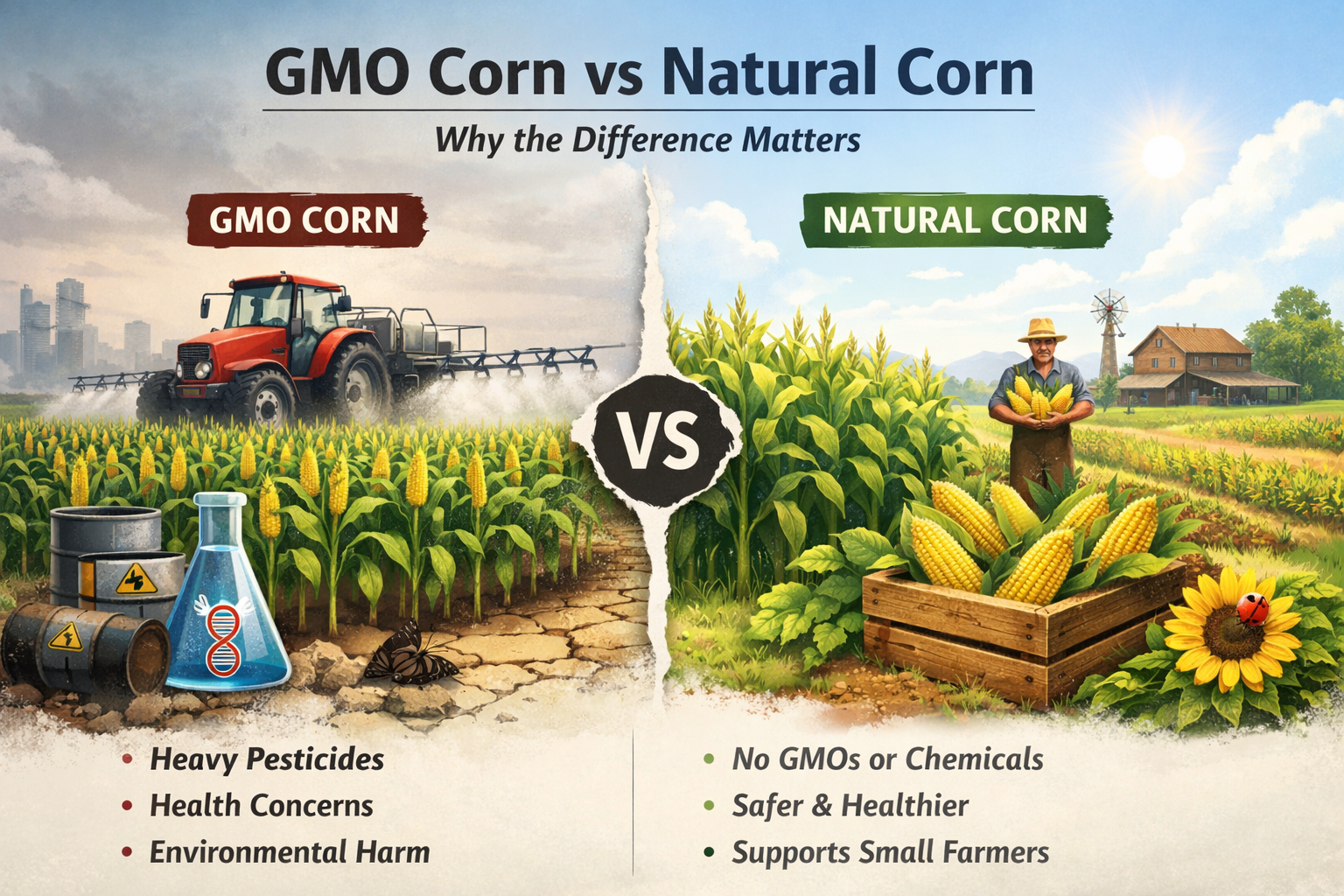
GMO Corn vs Natural Corn: Why the Difference Matters
Corn is one of the most widely consumed foods in the world. From street snacks to packaged products, it is part of our daily diet. However, not all corn is the same.
In recent decades, Genetically Modified (GMO) corn has become common, often without consumers realizing it. This raises an important question: Is GMO corn safe, or should we move toward natural or organic corn?
What Is GMO Corn?
GMO corn is created by altering its DNA in laboratories to achieve traits like insect resistance, herbicide tolerance, higher yield, and longer shelf life. These changes do not occur through natural breeding but by inserting genes from other organisms, including bacteria.
While this increases production efficiency, it also raises long-term concerns.
Why GMO Corn Is a Concern
GMO corn is usually grown with heavy use of chemical herbicides. As a result, chemical residues can remain in the crop and enter the human body over time, potentially affecting digestion and overall health.
Many people also report digestive discomfort and food sensitivity, possibly due to how GMO foods interact with gut bacteria.
Environmentally, GMO farming can lead to soil degradation, loss of beneficial insects, and water contamination. Additionally, GMO seeds often cannot be reused, reducing seed diversity and increasing farmers’ dependence on large corporations.
Why GMO Corn Is Not Approved in India
India has not approved GMO corn for commercial food cultivation due to:
-
Unclear long-term health effects
-
Risk to the country’s rich agricultural biodiversity
-
Concerns about farmer independence
-
Environmental and soil safety issues
India follows the precautionary principle, if a food is not proven safe over the long term, it should not be widely adopted. This is why only limited GMO crops like Bt cotton are allowed, not food crops such as corn.
Why Natural or Organic Corn Is Better
Natural and organic corn is grown using traditional methods without genetic alteration. It contains fewer chemical residues, is easier to digest, and is often preferred for its taste and nutritional value. Choosing natural corn also supports local farmers, healthier soil, and long-term food security.
Our Belief at MyCorn
At MyCorn, we believe real food should come from real farms, not laboratories. That is why we focus on naturally sourced corn, minimal processing, and honest ingredients.
Final Thought
GMO corn may address short-term production needs, but natural corn supports long-term health, for people, farmers, and the environment. Choosing natural food is not a trend; it is a return to balance.
— Sunil Kumar
The Corn Expert, Rooted in Nature